Your roof works harder than any other part of your home. In Central Florida, it stands up to brutal summer heat, heavy afternoon storms, high humidity, and the threat of hurricane season every year. A bit of routine roof maintenance goes a long way toward protecting that investment, and most of it costs far less than the repairs you avoid by staying ahead of trouble.
This guide walks through a practical roof maintenance checklist built for Florida homes, plus tips for different roof types, a look at what upkeep costs, and clear signs that it may be time to call a professional. Whether you own an asphalt shingle home in Bushnell or a metal roof out toward Webster, FL, these habits will help your roof last longer and perform better.
The good news is that you do not need to climb up top to handle most of this. A trained eye spots small problems before they turn into leaks, rot, or interior damage. Pairing your own ground-level checks with an annual roof inspection from a licensed roofing contractor is the smartest plan for any homeowner.
Why Roof Maintenance Matters in Florida
Florida roofs face a tough mix of conditions. UV exposure breaks down shingle granules and roofing sealants faster than in cooler climates. Constant moisture feeds algae, moss, and mold growth. Wind driven rain finds its way under loose flashing, and a single named storm can lift or crack materials that looked fine the week before.
Routine care keeps small issues from snowballing. A clogged gutter today becomes a fascia rot problem next season. A lifted shingle becomes a slow leak that stains your ceiling and weakens the decking underneath. Staying on top of maintenance protects your home value, supports any active warranty, and gives you peace of mind heading into storm season.
According to the Asphalt Roofing Manufacturers Association, dark streaks on a roof are often a blue green algae that feeds on the limestone filler in shingles, and routine cleaning helps slow it down. Proper attic airflow matters too. The U.S. Department of Energy notes that good ventilation and insulation reduce heat and moisture buildup that can shorten a roof’s life. And because hurricane prep is part of life here, the readiness tips from FEMA are worth an annual review before the season ramps up.
Your Seasonal Roof Maintenance Checklist
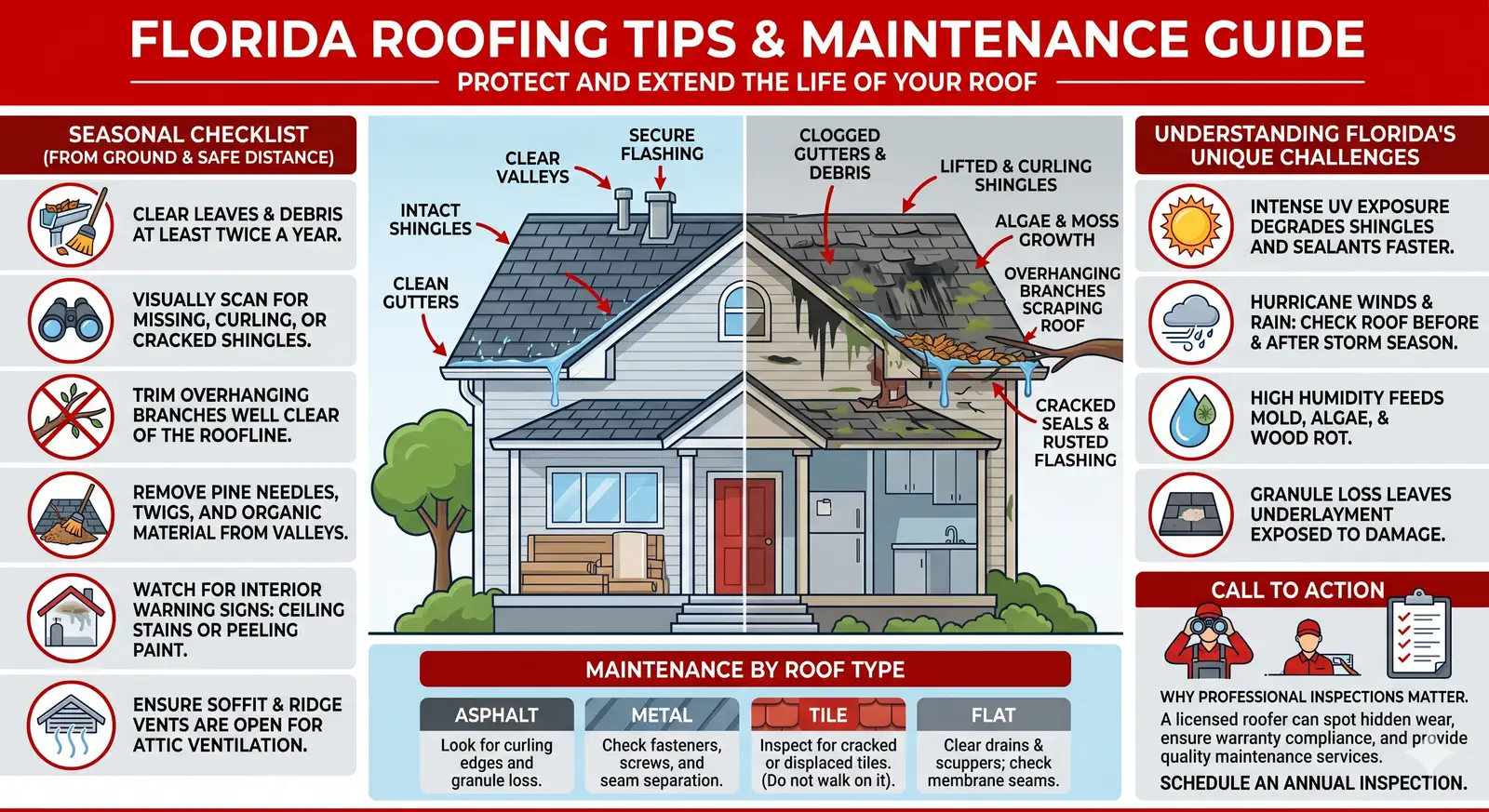
Use this checklist as your go to reference. Walk your property after major storms and at the change of each season. Most of these checks can be done from the ground with a pair of binoculars, which keeps you safe and off a ladder.
- Clean your gutters: Clogged gutters trap water against your roof edge and fascia, which invites rot and leaks. Clear leaves and debris at least twice a year, and more often if you have overhanging trees. Our gutter cleaning crew can handle this for you if the job feels risky.
- Keep moss and algae in check: Those black streaks and green patches are more than cosmetic. Over time they hold moisture against shingles and break them down. A gentle cleaning solution applied by a pro keeps growth under control without damaging the surface.
- Trim overhanging branches: Limbs that scrape the roof wear down shingle surfaces, and they give squirrels and rodents an easy path onto your home. Cut branches back so they sit well clear of the roofline, which also cuts down on debris.
- Clear debris off the roof: Pine needles, leaves, and twigs collect in valleys and around penetrations. That buildup traps water and feeds organic growth. Have it cleared so water can drain the way it should.
- Inspect flashing and seals: Flashing around chimneys, vents, and skylights is a common leak point. Look for lifted edges, cracked caulk, or rust. These spots take the brunt of wind driven rain and deserve a close look every year.
- Check that walls and windows stay watertight: Where the roof meets siding, dormers, or windows, sealant can fail over time. Water that sneaks in here often shows up far from the actual entry point, so catching it early saves headaches.
- Confirm your attic ventilation: Blocked soffit or ridge vents trap heat and humidity, which bakes your shingles from below and raises cooling bills. Make sure intake and exhaust vents are open and clear.
- Look for loose or missing shingles: After any strong wind event, scan for shingles that are lifted, curled, cracked, or gone. Bare spots leave the underlayment exposed and lead to leaks fast. Prompt roof repairs stop the damage from spreading.
- Watch for interior warning signs: Inside your home, water stains on ceilings, peeling paint, a musty attic smell, or daylight showing through the roof boards all point to a problem overhead. Do not wait on these.
- Schedule a professional inspection: Even a sharp homeowner misses things from the ground. An annual roof inspection from a licensed team catches hidden wear, checks every flashing and seal up close, and documents the condition of your roof for insurance or warranty purposes.
Common Roof Problems in Central Florida and What Causes Them
Central Florida’s subtropical climate creates a specific set of roofing challenges that Bushnell homeowners encounter more frequently than property owners in cooler, drier regions.
| Roof Problem | Primary Cause in Florida | Warning Signs | Recommended Action |
| Algae and Moss Growth | High humidity and shade | Black streaks, green patches on shingles | Professional soft wash cleaning |
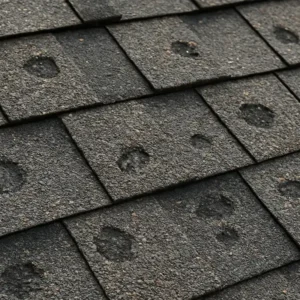
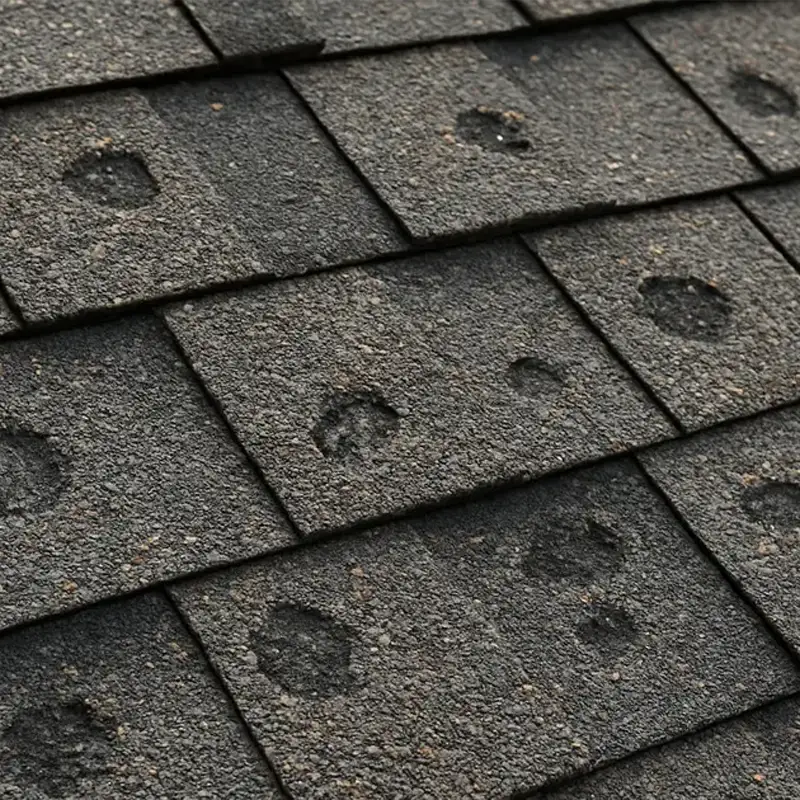
| Granule Loss | Intense UV exposure and age | Granules in gutters, bare shingle patches | Professional inspection, possible replacement |
| Lifted or Curling Shingles | Wind events and aging adhesive | Visible curling, shingles out of alignment | Prompt roof repair |
| Flashing Failures | Wind-driven rain and thermal expansion | Rust, lifted edges around vents or chimney | Flashing reseal or replacement |
| Fascia and Soffit Rot | Clogged gutters and moisture intrusion | Soft or discolored wood along roof edge | Gutter cleaning and fascia repair |
| Ponding Water | Inadequate drainage on flat roofs | Standing water after rain | Drain clearing, membrane inspection |
| Attic Moisture Buildup | Poor ridge and soffit ventilation | Musty smell, mold in attic, high cooling bills | Ventilation assessment and upgrade |
| Shingle Blow-Off | Hurricane and tropical storm winds | Missing shingles, exposed underlayment | Emergency roofing repair |
| Membrane Seam Separation | UV exposure and thermal movement on flat roofs | Visible splits or lifting at seam lines | Professional membrane repair |
| Wood Deck Rot | Chronic moisture intrusion | Soft spots, sagging areas on roof surface | Deck board replacement during re-roof |
Roof Maintenance by Roof Type
Central Florida’s diverse housing stock means Bushnell and Sumter County homeowners deal with a wide range of roofing systems, each with its own maintenance requirements and vulnerabilities. Understanding what your specific roof type needs throughout the year is the most effective way to extend its lifespan and avoid preventable repairs.
Asphalt Shingle Roofs
The most common choice across Bushnell and the surrounding area, asphalt shingles ask for attention to granule loss, curling edges, and algae streaks. Watch your gutters for shingle granules, which look like coarse black sand and signal aging. Keep an eye on sun beaten south and west facing slopes, since they wear first. If you are weighing materials for a future project, our guide on asphalt shingles versus metal roofing in Florida breaks down the tradeoffs. Learn more about our asphalt shingle roofing options as well.
Metal Roofs
Metal is a strong fit for Florida weather, but it still needs care. Check fasteners and screws for backing out or worn rubber washers, and look at seams and panel laps for separation. Keep the surface clear of debris that can trap moisture, and rinse off salt and grime in coastal zones. Touch up any scratches that expose bare metal to head off rust. See our full metal roofing page for details on installation and upkeep.
Tile Roofs
Concrete and clay tile roofs are durable, yet individual tiles crack, slip, or break under foot traffic and falling limbs. Walking a tile roof is a job for a pro, since careless steps cause more damage than they fix. Inspect for cracked or displaced tiles, check the underlayment that does the real waterproofing, and clear valleys of debris so water flows free.
Flat and Commercial Roofs
Flat and low slope roofs on businesses and some homes need a different approach. Standing water, or ponding, is the main enemy, so keep drains and scuppers clear. Inspect membrane seams, flashing, and any rooftop equipment curbs for splits or lifting. Single ply systems such as TPO roofing and other flat roof systems benefit from a scheduled check, and many owners add a maintenance plan through our commercial roofing team.
What Roof Maintenance Costs
One of the best things about roof maintenance is that it is cheap compared to the alternative. A routine professional inspection in the Bushnell area runs a modest flat fee, and many roofers fold it into a service visit. Gutter cleaning and minor debris removal are easy on the budget too.
Compare that with the cost of neglect. A small leak left alone can rot decking, ruin insulation, and damage drywall and flooring, turning a minor fix into a major repair bill. Worst case, deferred upkeep shortens the life of the whole roof and pushes you toward an early roof replacement years before you should have needed one. Spending a little each year is the surest way to protect the bigger investment overhead. We are always happy to give a free, honest estimate before any work begins.
Repair or Replace? Knowing the Difference
At some point every homeowner faces the question of whether to patch a roof or start fresh. A few guideposts help.
Lean toward repair when the damage is contained, the roof is still within its expected life span, and the underlying decking is sound. A handful of missing shingles, a single leak around a vent, or storm damage in one area often calls for targeted roof repairs.
Lean toward replacement when the roof is near or past its rated age, when leaks show up in more than one spot, or when granule loss and sagging point to widespread wear. If you are at that stage, our roof installation and residential roofing teams walk you through the options. After a major storm, the signs of hidden storm damage on a Florida roof are not always obvious, so a professional assessment is the safe call.
Storm Season Readiness
Hurricane season in Florida runs from June through November, and a little prep makes a big difference. Before the season, secure loose items in your yard, confirm your roof is in sound shape, and know who to call if the worst happens. Our storm damage roofing services team responds fast after a storm, and our emergency tarping service protects your home from further water intrusion while permanent repairs are arranged.
Ready to Protect Your Home? Start Here
Tippy Top Roof Repair is a family-owned, licensed, and insured roofing company serving Bushnell, Florida and the surrounding communities. From routine inspections and repairs to full roof replacement and new installation, our experienced team delivers honest guidance, quality workmanship, and free estimates built for Florida weather.
Ready to give your roof the attention it deserves? You can browse all of our roofing services any time, or contact our team for a free estimate. Learn more about our team or view our completed work in our project gallery. You can also read through verified client testimonials from your neighbors.
Tippy Top Roof Repair
Address: 70 Co Rd 532C, Bushnell, FL 33513, United States
Phone Number: (352) 457-4472
Google Maps: Find Us Here
Business Hours:
Monday: Open 24 hours
Tuesday: Open 24 hours
Wednesday: Open 24 hours
Thursday: Open 24 hours
Friday: Open 24 hours
Saturday: Open 24 hours
Sunday: Open 24 hours
FAQs About Roofing Tips & Maintenance
How often should Florida homeowners inspect their roof?
At minimum, schedule a professional roof inspection once per year and after every major storm. Florida’s hurricane season, intense UV exposure, and year-round humidity create conditions that accelerate roof wear faster than most other climates in the country.
What are the most common signs of roof damage in Florida?
Watch for missing or curling shingles, black algae streaks, granules collecting in gutters, water stains on interior ceilings, soft spots near the roof edge, and lifted flashing around vents or chimneys. Many of these warning signs are visible from the ground with a pair of binoculars.
How do I remove algae and moss from my Florida roof?
Never pressure wash your shingles, as high pressure strips protective granules and shortens roof life significantly. A licensed roofing contractor applies a low-pressure soft wash solution specifically formulated to kill algae and moss without damaging the shingle surface.
Does Florida humidity affect how often I need to maintain my roof?
Yes. High humidity accelerates algae and moss growth, promotes wood rot in fascia and decking, and degrades roofing sealants faster than in drier climates. Bushnell and Sumter County homeowners benefit from more frequent maintenance checks than the national average recommends.
How do I prepare my roof for the Florida hurricane season?
Schedule a professional inspection before June, trim overhanging branches, clear gutters and downspouts, and confirm that all flashing and seals are intact. Knowing who to call for emergency roofing or tarping before a storm hits saves critical time when damage occurs.
Can I do my own roof maintenance or do I need a professional?
Ground-level checks like scanning for missing shingles, clearing visible debris, and monitoring gutters are safe for homeowners to handle. However, climbing onto your roof without proper training and equipment is dangerous and can void your warranty. Leave inspections, cleaning, and repairs to a licensed roofing professional.
How does poor attic ventilation affect my roof in Florida?
Blocked soffit or ridge vents trap heat and moisture in your attic, which bakes shingles from below, drives up cooling costs, and creates conditions that accelerate wood rot and mold growth. Proper attic ventilation is one of the most overlooked factors in extending roof lifespan across Central Florida.
How do I know if my roof needs repair or full replacement?
If damage is isolated, the roof is under fifteen years old, and the decking is structurally sound, a targeted repair is usually the right call. If you are seeing multiple leaks in different areas, widespread granule loss, sagging, or a roof past its rated lifespan, a full replacement delivers better long-term value.
What maintenance does a metal roof require in Florida?
Check exposed fasteners and rubber washers annually for backing out or deterioration, inspect seams and panel laps for separation, keep the surface free of debris that traps moisture, and touch up any scratches that expose bare metal to prevent rust. Metal roofs require less maintenance than shingles overall but still benefit from annual professional inspections.
How do clogged gutters damage my roof in Florida’s rainy season?
During Florida’s heavy rainy season, blocked gutters cause water to back up under shingles and against fascia boards, leading to wood rot, foundation erosion, and interior moisture intrusion. Cleaning your gutters at least twice per year, and more frequently near overhanging trees, is one of the simplest and most cost-effective ways to protect your entire roofing system.